
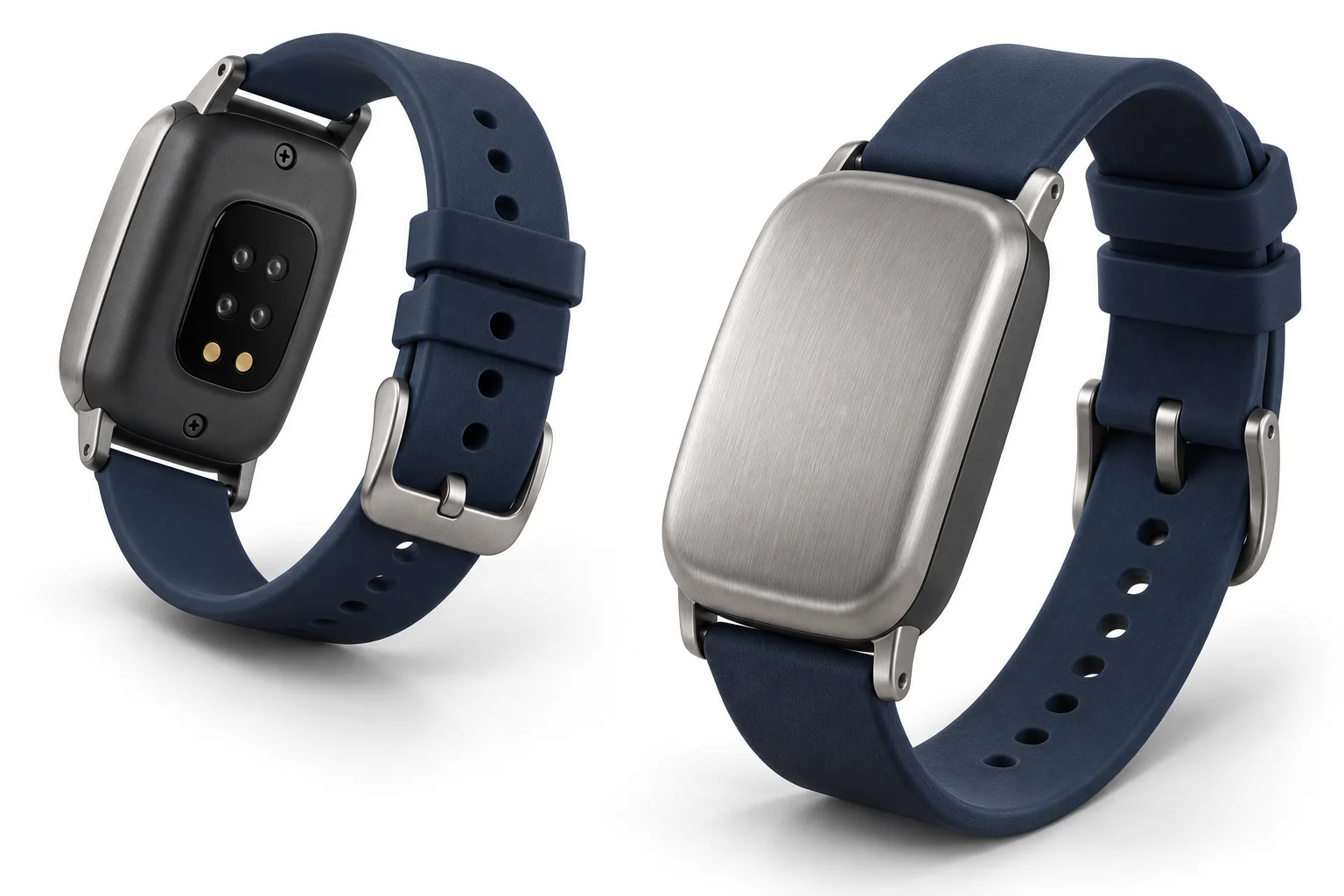
The design question
The product needed a coherent mechanical arrangement that connected internal packaging, the enclosure and the way the product would be worn. The work also had to distinguish confirmed component information from inputs that were still provisional.
That distinction mattered throughout development. A plausible component envelope can help explore a layout, but it does not establish the final supplier geometry or all of its interfaces.
Our role
We Master Design developed the mechanical architecture and industrial design, then progressed the agreed work into detailed CAD. The scope included packaging, the wrist attachment and enclosure considerations, with serviceability and appearance assessed as part of the design decisions.
Electronics and other externally controlled inputs were tracked as dependencies. The mechanical scope did not imply ownership of firmware, PCB development, physical manufacture or certification.
From architecture to detailed design
The architecture review organised the product's mechanical arrangement and design direction. Detailed CAD developed that direction into the agreed package. Final client comments were incorporated before acceptance of the delivered design.
Where supplied information was incomplete, the records kept those limitations visible. Manufacturer feedback remained a further step rather than being assumed from client acceptance.
Delivered work
- Mechanical architecture and industrial design review package.
- Detailed CAD developed within the agreed mechanical scope.
- Final design revisions responding to client comments.
- A client-accepted design package handed over for manufacturer feedback.
The outcome and its boundary
The client accepted the architecture and detailed-CAD packages. The accepted design was sent to the manufacturer for feedback. Manufacturer acceptance, fabrication approval, physical test results and production release are not established by the evidence reviewed for this story.
This project demonstrates an organised progression from mechanical layout to a documented design handover, with clear responsibility for the next review.
Developing a physical product?
Product and industrial design can establish the design direction, while technical design and CAD develops the agreed geometry and documentation. Describe your current stage and desired next deliverables when you start a project.